


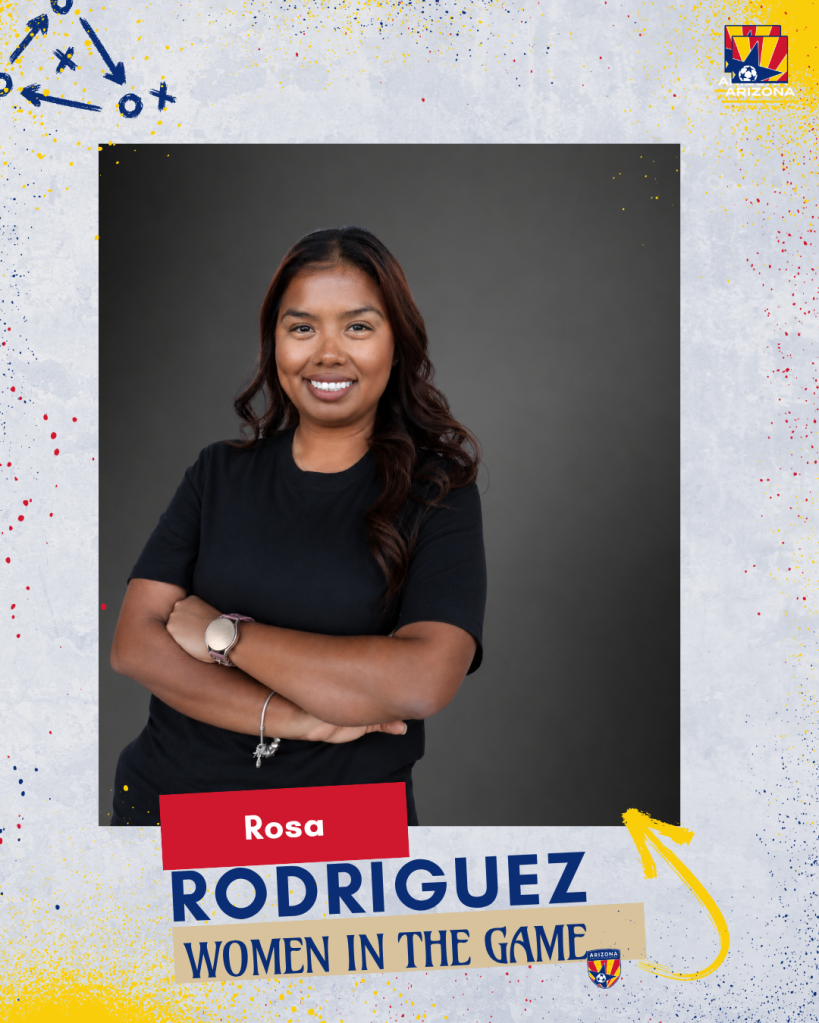
Rosa Rodriguez’s soccer journey began in Mexico, where she grew up playing with boys and developed a deep love for the game despite limited resources. After moving to the United States, she found new opportunities through dedication and consistency, and coaching girls’ teams became a dream come true.
For Rosa, soccer is more than a sport — it is a community, a second family, and a way to inspire young players, especially girls, to believe in themselves. Through coaching, she focuses on building confidence, discipline, teamwork, resilience, and a love for the game.
Rosa is passionate about creating positive environments where girls feel supported, empowered, and valued. Her hope for the future of women’s soccer is continued growth in visibility, investment, opportunities, and support for female players and coaches.
1. Can you share your journey into your current role?
I lived in Mexico for the first 15 years of my life. I’ve played soccer for as long as I can remember. Growing up, I always played with boys because I knew that if I wanted to become better and compete at a higher level with girls, I had to challenge myself against the best players at my school.
Every Saturday, I had to wake up at 4:00 a.m. to walk to school so the bus could pick us up and take us to the fields where we would play our games. I never had my own cleats, people would lend me some just so I could step onto the field and play. After the games, I would go home, eat quickly, and then leave again to play another match with the neighborhood team. It was always like that, always playing with boys, always chasing the game I loved.
Coming to the United States opened my eyes to all the incredible things that can be achieved through dedication and consistency. Being able to coach girls’ teams has truly been a dream come true. I know many people say that, but this has honestly always been my dream.
I always imagined myself driving a white van full of soccer balls and uniforms, taking girls to practices and games everywhere, while my own children played the sport I love most. Helping young girls understand the game, visualize it, and watching them grow little by little has been one of the greatest blessings and experiences I have ever witnessed.
Soccer has given me purpose, passion, and a way to inspire others and for that, I will always be grateful.
2. What does being a part of the soccer community mean to you?
Being part of the soccer community means being part of something bigger than yourself. Soccer connects families, players, coaches, and entire communities through passion, hard work, and love for the game.
For me, it means having the opportunity to inspire young players, especially girls, to believe in themselves and chase their dreams no matter where they come from. Soccer taught me discipline, resilience, teamwork, and confidence, and now I get the chance to pass those values on to the next generation.
The soccer community has become my second family. It’s a place where lifelong friendships are built, lessons are learned, and memories are created both on and off the field. Being able to help players grow not only as athletes, but as people, is one of the greatest rewards of my journey.
3.If you weren’t actively participating in the development of youth soccer, what do you think you’d be doing instead?
Honestly, it’s hard for me to imagine my life without youth soccer because it has become such a big part of who I am. But if I wasn’t actively involved in developing young players, I believe I would still be doing something centered around helping, mentoring, and inspiring others.
I’ve always had a passion for guiding people, building confidence, and creating a positive environment where others can grow. Soccer just happens to be the platform that allows me to do that every day. Whether it’s teaching life lessons, encouraging discipline, or helping young athletes believe in themselves, that purpose would always be part of my life in one way or another.
At the end of the day, I love being around people, building community, and making an impact, especially in the lives of kids and families.
4.Who has been a role model or mentor for you in this space?
Coach Martinez
5.What initiatives, programs, or events have you been part of that made a real difference?
I’ve been involved in open practices, tryouts, tournaments, and team development programs that focused not only on improving players technically, but also on teaching discipline, teamwork, confidence, and resilience. Seeing girls who were once shy or unsure of themselves become leaders on and off the field has been one of the greatest rewards of coaching.
6.How do you inspire others especially young women and girls to get involved in soccer?
I want girls to see someone who understands the sacrifices, challenges, and doubts that can come with chasing a dream. Growing up, I didn’t always have the best resources, but I had determination and belief in myself. I share my story so they understand that success is not about where you start, but about the effort and heart you put into your journey.
I also focus on creating an environment where girls feel confident, supported, and empowered to make mistakes, learn, and grow. Soccer is not only about developing athletes, it’s about building strong, confident young women who believe in themselves on and off the field.
The biggest inspiration I can give is helping them see their own potential before they fully see it themselves.
7.An angel investor has offered you $1m to grow the game of women’s soccer, how would you invest this money?
If I had the opportunity to invest $1 million into growing women’s soccer, I would focus on creating more access, development opportunities, and long-term support systems for young girls and their families.
A large portion of the investment would go toward making soccer more affordable. Too many talented players are unable to continue playing because of financial barriers like club fees, travel costs, uniforms, equipment, and tournament expenses. I would create scholarship programs and community support initiatives so that every girl with passion and talent has the opportunity to play, regardless of her financial situation.
I would also invest in high-quality development programs that focus not only on technical skills, but also on leadership, confidence, mental strength, nutrition, and education. I believe developing the whole player is just as important as developing the athlete.
Another major focus would be building safe and positive environments for girls to grow in the game. That includes better training facilities, mentorship programs, female coaching development, and opportunities for young girls to connect with role models who inspire them.
Most importantly, I would invest in creating a culture where girls feel valued, supported, and seen in soccer. The growth of the women’s game starts with giving young players the confidence to believe that they truly belong in it.
8.If you could watch a match anywhere in the world, where would it be?
Mexico, azteca stadium.
9.What’s one change you would love to see in women’s soccer in the next 5 years?
I would love to see women’s soccer continue to grow in visibility, investment, and support so that young girls can dream bigger without limitations. More professional pathways, stronger youth development systems, better support for female coaches, and increased community investment would make a huge difference for the future of the game. Most importantly, I want every young girl who steps onto a soccer field to feel valued, respected, and confident that her passion for the sport matters just as much as anyone else’s. The women’s game deserves to be celebrated not only for how far it has come, but for how powerful its future can be.
10.Favorite motivational quote or mantra?
“If the things that are truly worth it in life were easy, anyone would do them.”
11.Best book, movie, or TV show about soccer you’ve ever seen?
Rafa Marquez soccer life in Netflix
12.What’s your favorite piece of soccer gear or memorabilia you own?
Mexico Jersey.